When most people around the world hear the phrase “American university,” their minds immediately jump to a familiar handful of elite institutions: Harvard, Stanford, MIT, or Yale. While these prestigious names certainly capture global headlines, they represent only a tiny fraction of what higher education in the United States truly looks like. With over 4,000 degree-granting institutions spread across fifty states, the American higher education system is one of the most diverse, decentralized, and adaptable educational landscapes in the world.
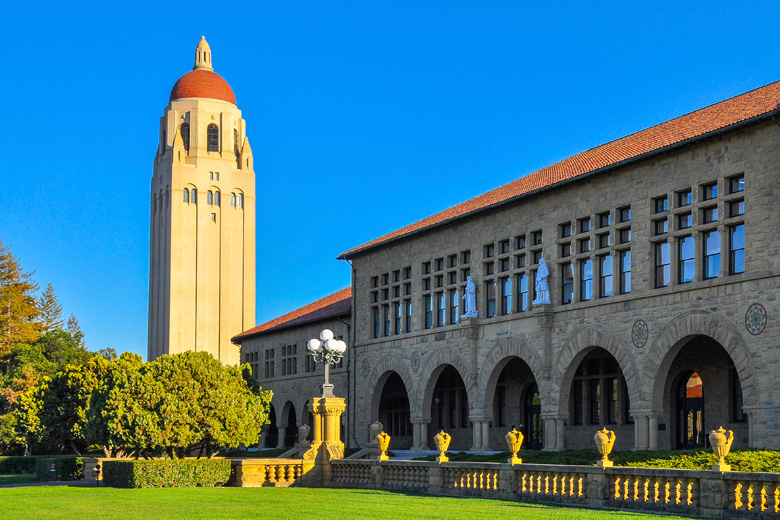
For international students, researchers, and curious readers alike, understanding this system requires looking past university rankings and exploring how American higher education is actually structured. From small, discussion-based liberal arts colleges tucked into quiet New England towns to massive public research powerhouses spanning thousands of acres in the Midwest, the United States offers an educational model tailored to nearly every learning style and career ambition.
The Decentralized Structure of Higher Education
Unlike many countries where a central Ministry of Education regulates curricula, admissions standards, and tuition rates nationwide, the United States has no federal system governing its universities. Instead, higher education is largely managed at the state level or by independent boards of trustees. Accreditation—the process that ensures a university meets specific academic quality standards—is handled by private, non-profit regional and national organizations.
This decentralization fosters intense competition and innovation. Universities have the autonomy to design unique academic programs, partner directly with local industries, and respond rapidly to shifts in the global job market. Consequently, two universities located just miles apart might offer completely different campus cultures, grading philosophies, and graduation requirements.
Public vs. Private Institutions: More Than Just Tuition
A fundamental distinction within the American system lies between public and private universities, and the difference goes far beyond the price tag.
Public universities, often referred to as “state schools,” are funded primarily by state governments and taxpayers. Institutions such as the University of California, Berkeley, the University of Michigan, or the University of Texas at Austin often enroll tens of thousands of students. Because they receive public funding, they offer significantly lower tuition rates to residents of their respective states, while charging higher “out-of-state” rates to students from elsewhere in the U.S. or abroad. These universities are frequently major engines of regional economic growth, operating extensive hospital networks, agricultural extension programs, and massive research laboratories.
Private universities, on the other hand, rely on tuition fees, private donations, research grants, and financial endowments rather than direct state funding. As a result, they do not distinguish between in-state and out-of-state students when setting tuition. While their sticker prices are often higher, wealthy private institutions frequently possess substantial financial aid budgets, allowing them to offer generous need-based grants or merit scholarships that can make attendance more affordable than a public alternative.
The Liberal Arts Philosophy and Academic Flexibility
One of the most distinctive features of American undergraduate education is its commitment to the liberal arts philosophy. In many European or Asian systems, students apply directly to a specific faculty—such as law, medicine, or engineering—and begin specialized training on day one. In contrast, the vast majority of American universities admit students to the institution as a whole, giving them up to two years to explore different disciplines before officially declaring a “major.”
During these initial years, students complete general education requirements spanning the humanities, social sciences, natural sciences, and mathematics. The underlying belief is that an engineer benefits from understanding ethics and persuasive writing, while a literature major gains valuable analytical skills from studying statistics or environmental science. This flexibility also allows students to combine seemingly unrelated fields—such as computer science and music, or biology and economics—through double majors and minors, creating interdisciplinary skill sets highly valued by modern employers.
Campus Life as an Extension of the Classroom
At an American university, education is rarely confined to lecture halls and libraries. Residential campus life is widely viewed as an essential component of personal development. Many institutions require first-year students to live in on-campus dormitories, fostering tight-knit communities where students from vastly different geographic and socioeconomic backgrounds learn to navigate shared living spaces.
Beyond academics, universities invest heavily in extracurricular infrastructure. Student-run newspapers, debate societies, cultural organizations, volunteer initiatives, and entrepreneurial incubators operate alongside multi-million-dollar athletic programs. For many students, managing a campus organization or leading a community service project provides practical leadership experience that rivals what they learn in formal coursework.
Navigating the Financial Landscape
The cost of attending an American university is notoriously high, often making headlines for contributing to student debt. However, the published “cost of attendance” rarely tells the full story. American higher education operates on a complex pricing model that resembles airline ticketing more than a fixed retail price.
Through a combination of federal aid (for domestic students), institutional grants, athletic and academic scholarships, and work-study programs, the actual “net price” a student pays can be substantially lower than the advertised tuition. Furthermore, many students utilize community colleges—two-year public institutions offering associate degrees—as an affordable stepping stone, completing their general education credits at a fraction of the cost before transferring to a four-year university to finish their bachelor’s degree.
Conclusion
To view American universities solely through the lens of elite, hyper-selective institutions is to miss the true strength of the system. Its real value lies in its breadth, second-chance pathways, and relentless emphasis on interdisciplinary exploration. Whether a student is seeking cutting-edge doctoral research, hands-on technical training, or a broad liberal arts foundation, the American university ecosystem remains uniquely designed to adapt to the individual—empowering students not just to prepare for a specific job, but to build the intellectual agility needed to navigate an ever-changing world.