Walk into any classroom, and you will see dozens of students listening to the exact same lecture, reading the exact same textbook, and looking at the exact same whiteboard. Yet by the end of the hour, one student has mastered the concept effortlessly, another feels overwhelmed and anxious, and a third is staring out the window, completely disengaged. Why does the same instruction produce wildly different results? Answering that question is the core mission of educational psychology—the scientific study of how human beings learn, retain information, and develop intellectually and emotionally within educational settings.
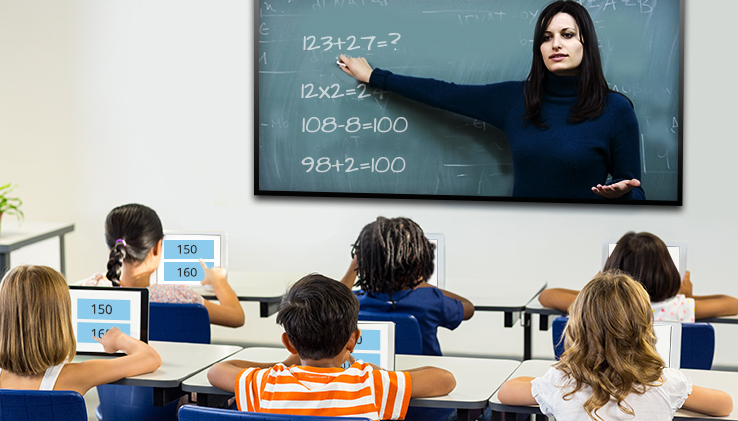
Far from being an abstract academic discipline locked inside university journals, educational psychology is the invisible architecture behind effective teaching, curriculum design, and personal study habits. By examining the cognitive, behavioral, emotional, and social processes involved in acquiring knowledge, educational psychologists help bridge the gap between how educators teach and how the human brain actually learns.
The Architecture of Memory: Cognitive Load and Information Processing
One of the most practical contributions of educational psychology is its explanation of how memory works. For decades, traditional schooling operated on the assumption that presenting more information faster led to faster learning. Cognitive load theory, pioneered by educational psychologist John Sweller, proved the exact opposite.
The human brain processes new information through working memory, a mental workspace with a notoriously small capacity and short duration. When a lesson bombards students with dense slides, rapid verbal explanations, and unrelated background distractions all at once, working memory becomes overloaded, and almost nothing transfers into long-term memory. Effective instructional design respects these biological limits. Techniques such as “chunking” complex material into smaller units, pairing visual diagrams with concise verbal explanations, and using worked examples before asking students to solve problems independently allow learners to encode knowledge deeply without mental exhaustion.
Motivation Beyond Grades: Intrinsic Drive and Mindset
Intelligence alone rarely predicts academic success; motivation is often the decisive factor. Educational psychology explores why some learners persist through difficult challenges while others give up at the first sign of frustration.
A central framework in this area is Self-Determination Theory, which identifies three universal psychological needs that fuel intrinsic motivation: autonomy, competence, and relatedness. When students have a degree of choice in how they explore a topic, feel capable of succeeding with effort, and experience genuine connection with their teachers and peers, curiosity flourishes naturally. Relying solely on external rewards—such as gold stars, grades, or fear of punishment—often undermines this internal drive over time.
Closely tied to motivation is psychologist Carol Dweck’s research on growth versus fixed mindsets. Learners who view intelligence as a static trait tend to avoid challenging tasks out of fear that failure will expose their limitations. Conversely, when educators praise effort, strategy, and persistence rather than innate “smartness,” students learn to interpret mistakes as valuable feedback rather than personal defeat.
The Social and Emotional Dimensions of Learning
Human learning never happens in an emotional vacuum. Educational psychology recognizes that stress, anxiety, and a sense of belonging directly affect the brain’s ability to focus and recall facts. When a student experiences chronic fear of embarrassment or judgment, the brain’s threat-response system diverts energy away from the prefrontal cortex—the very region responsible for reasoning, planning, and problem-solving.
Furthermore, foundational theorists like Lev Vygotsky demonstrated that learning is inherently social. Through his concept of the Zone of Proximal Development, Vygotsky showed that learners achieve their highest potential when guided by a slightly more knowledgeable mentor or peer who provides temporary support, known as “scaffolding.” Collaborative group discussions, peer tutoring, and constructive feedback transform classrooms from silent, isolated rows into vibrant intellectual communities where ideas are tested and refined together.
Applying Educational Psychology to Everyday Study Habits
You do not need to be a classroom teacher to benefit from educational psychology; its findings offer a powerful blueprint for anyone trying to master a new skill or study for an exam. Research consistently shows that some of the most popular study habits—such as passively re-reading notes or highlighting entire pages of a textbook—create an “illusion of competence” without building durable memory.
Instead, educational psychologists advocate for active learning strategies backed by decades of empirical evidence:
- Retrieval Practice: Closing the book and forcing yourself to recall information from memory strengthens neural pathways far more effectively than reviewing the material again.
- Spaced Repetition: Distributing study sessions across several days or weeks beats last-minute cramming, giving the brain time to consolidate memories during sleep.
- Interleaving: Mixing different types of problems or related topics within a single study session trains the brain to discriminate between concepts and apply the right strategy in unfamiliar situations.
Conclusion
Educational psychology reminds us that effective learning is not a matter of luck, innate genius, or brute-force memorization. It is a predictable, human process governed by how we manage attention, build motivation, regulate emotion, and connect new ideas to what we already know. Whether applied by teachers designing inclusive lessons or by independent learners refining their daily study routines, educational psychology turns the mystery of learning into a practical science—empowering every mind to reach its fullest potential.